


The Elementor Affiliate Program is one of the highest-paying affiliate opportunities in the WordPress space.
With commission rates ranging from 45% to 65% and potential payouts of up to $799 per sale, it’s no surprise that more content creators, bloggers, and digital marketers are jumping on board.
In this review, I’ll walk you through my own experience with the program—what it offers, how it works, and whether it’s actually worth promoting.
Elementor Affiliate Program Overview
| Category | Details |
| Cost Per Action (CPA) | Earn for each first purchase by a new customer |
| Commission Rate | 45% to 65%, based on monthly sales volume |
| Cookie Duration | 45 days |
| Payment Threshold | $200 minimum in cleared commissions |
| Payment Options | PayPal (other options by request) |
| Payment Frequency | Monthly, by the 20th (after 30-day refund window) |
| Regions | Available globally |
| Earning Potential | Up to $799 per sale (retroactive tier upgrades apply) |

Join the Elementor Affiliate Program Today!
What Is The Elementor Affiliate Program?
The Elementor Affiliate Program is a marketing initiative that lets you earn commissions by promoting Elementor, a popular website builder plugin for WordPress.
Affiliates earn commissions by referring customers to purchase Elementor products, such as Elementor Pro subscriptions and hosting plans.
That includes the website builder, AI tools, hosting, image optimization, and even accessibility plugins like Ally.
Personally, I’ve joined a lot of affiliate programs, but Elementor’s setup impressed me for a few reasons:
- You start at 45% commission, and as you drive more sales, your past earnings retroactively bump up to as high as 65%.
- There’s no cap on how many people you can refer.
- They reward performance through a VIP program with special perks, co-branded content, and even paid collaborations.
- And unlike some programs that feel static, Elementor keeps adding new products—more chances for me (and you) to earn without lifting a finger once the content is live.
How Does the Elementor Affiliate Program Work?
Honestly, it’s one of the easiest affiliate programs I’ve ever joined. You can go from signup to promotion in minutes. Here’s how simple it is:
Step 1 – Sign Up. You just fill out a short application form—it took me under two minutes. If your content aligns with Elementor’s audience and you meet their basic requirements (like having an active website or platform), you’re in a good position to be approved.
Step 2 – Get Your Tracking Link. Once approved, you get access to your own affiliate dashboard. From there, you can generate tracking links for different Elementor products or landing pages. You’re in full control—you get to choose the best link for your audience.
Step 3 – Promote & Get Paid. Start sharing your link wherever it makes sense: in your blog posts, YouTube video descriptions, email newsletters, or anywhere else your audience clicks. Elementor gives you a 45-day cookie tracking window, which means if someone clicks your link and buys within 45 days—you earn the commission.

That’s the surface level. But here’s a closer look at how tracking and attribution work once you start promoting.
Elementor uses an advanced affiliate tracking system that ensures your clicks and conversions are properly recorded—across different platforms and devices. That part really reassured me.
Let me break it down for you:
- Cookie Duration: Every visitor who clicks your affiliate link gets a 45-day tracking cookie. This gives your referrals plenty of time to come back and complete their purchase—and you’ll still earn the commission if they do.
- Web and Mobile Web Tracking: Whether your referral visits the Elementor site from a desktop browser or their phone, your affiliate ID is tracked consistently across both. That means you won’t miss out if they switch devices.
- Deeplink Support: The Elementor Affiliate Program supports deeplink functionality, allowing you to create custom referral links that direct users to specific pages on the Elementor website. For example, if you’re writing a blog post about Elementor’s AI-powered tools, you can link directly to the AI tools page. Or if you’re doing a video walkthrough of Elementor’s hosting plans, you can send your viewers straight to the hosting page—all with your affiliate tracking still intact.
- Multiple Conversions: This is one of my favorite parts: Elementor doesn’t limit you to one-time commissions. Thanks to their multi-product setup, you can keep earning when your referred user makes a different first purchase down the line (for example, after buying Hosting, they later add Elementor AI or Image Optimizer). As long as it’s their first purchase of that product and still within the attribution window, it counts.
So yeah—it’s simple on the surface but quite smart behind the scenes. And that’s what makes it so effective. Once your link is out there, Elementor’s system does the rest.
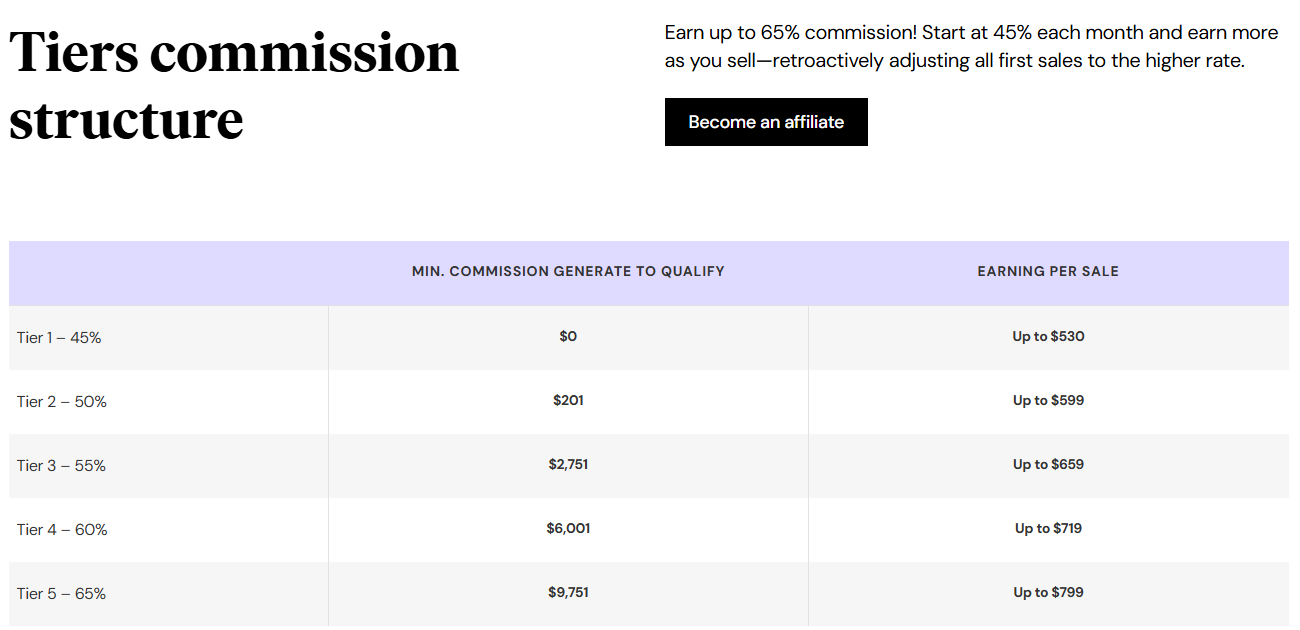
How Much Can You Make From the Elementor Affiliate Program?
Let’s be honest—when joining any affiliate program, the first thing on your mind is how much you can actually earn. With Elementor, the potential is seriously impressive, especially once you understand how the commission system works.
Here’s a breakdown of how earnings are calculated:
- Commission rates start at 45% and can go up to 65% based on your monthly sales volume.
- You can earn up to $799 per sale, depending on the product purchased and your tier level.
- Elementor boasts high conversion rates, especially among audiences already interested in WordPress tools. Many affiliates report conversion rates between 2%–5%.

To give you a clearer idea, I’ve prepared a table of example scenarios below.
Let’s say you’re just starting out with Elementor’s affiliate program. Here’s how much you could make depending on your monthly traffic and conversion performance.
| Scenario | Monthly Clicks | Conversion Rate | Sales Per Month | Avg Commission (45%) | Estimated Earnings/Month |
| Low | 500 | 2% | 10 | $400 | $4,000 |
| Moderate | 2,000 | 3% | 60 | $500 | $30,000 |
| High | 5,000 | 4% | 200 | $600 | $120,000 |
- These figures assume your referrals purchase Elementor’s mid-to-high tier plans or bundles like Hosting or AI.
- As your monthly sales volume grows, you move into higher commission tiers (up to 65%), which boosts your earnings—even retroactively for that month.
And because Elementor offers multiple products (Website Builder, AI, Hosting, Image Optimizer, etc.), you can earn multiple commissions from the same referral over time.
What Influences Your Earnings?
Your success as an Elementor affiliate depends on more than just clicks. Here’s what really makes the difference:
- Traffic Volume: The more visitors you send to Elementor, the more chances you have to convert. If you already run a blog, YouTube channel, or email list, this gives you a strong advantage.
- Promotion Channels: Affiliates who combine blog reviews, tutorials, email marketing, and social media tend to earn more. The key is using the right message on the right platform.
- Audience Relevance: You’ll do best if your audience already cares about website building, WordPress, design, or digital marketing. Promoting Elementor to the right people makes conversions a lot easier.
- Content Quality: In-depth reviews, how-to guides, comparison posts (like “Elementor vs Divi”), and video walkthroughs perform exceptionally well—because they help users make informed decisions.
- Consistency and Optimization: Like anything affiliate-related, you don’t just post a link and disappear. Affiliates who track performance, test new placements, and optimize their content earn consistently higher commissions.
Who Should Join Elementor Affiliate Program?
The Elementor Affiliate Program is one of the most rewarding options available to creators, freelancers, and marketers working in the digital space. You don’t need to be a full-time affiliate or a tech expert to succeed—just having the right audience and content focus is enough to start earning consistently.
Here are the types of people and groups who benefit most from this program:
- Bloggers and Content Creators: If you write about WordPress, web design, online business tools, or tutorials, Elementor fits right into your content strategy.
- YouTubers and Tutorial Creators: Product walkthroughs, comparisons, and Elementor how-to videos perform really well—especially if you show your audience how to build with Elementor step by step.
- Digital Marketers and SEO Experts: If you already run traffic through organic content or email campaigns, Elementor’s high conversion rates and tiered commissions make it worth adding to your promotion list.
- Web Designers and Developers: If you build websites for clients using WordPress, promoting Elementor’s tools (like Hosting, AI, or Image Optimizer) is a natural fit—and you get rewarded for tools you probably already use.
- Freelancers and Agencies: Whether you’re working on client sites or recommending software tools, you can earn commissions on Elementor purchases your clients make through your referral link.
- Newsletter Authors and Educators: If you teach others how to build sites, run a tech-focused newsletter, or share WordPress resources, Elementor offers real value you can confidently recommend.
- Affiliate Marketers: If you run niche sites or product review platforms, Elementor’s multiple product offerings and 45-day cookie make it a strong addition to your portfolio.
Basically, if your audience builds websites or uses WordPress, you’re in a perfect position to monetize with Elementor.
Pros & Cons of Elementor Affiliate Program
- High commission rates
- Multiple product earnings
- 45-day tracking cookie
- Tier-based bonus structure
- Deep linking supported
- Strong brand reputation
- Easy-to-use dashboard
- Wide promotional flexibility
- $200 payout threshold
- No self-referrals allowed
- Strict PPC restrictions
- PayPal only (for most)
- Approval not guaranteed
Products to Promote as an Elementor Affiliate
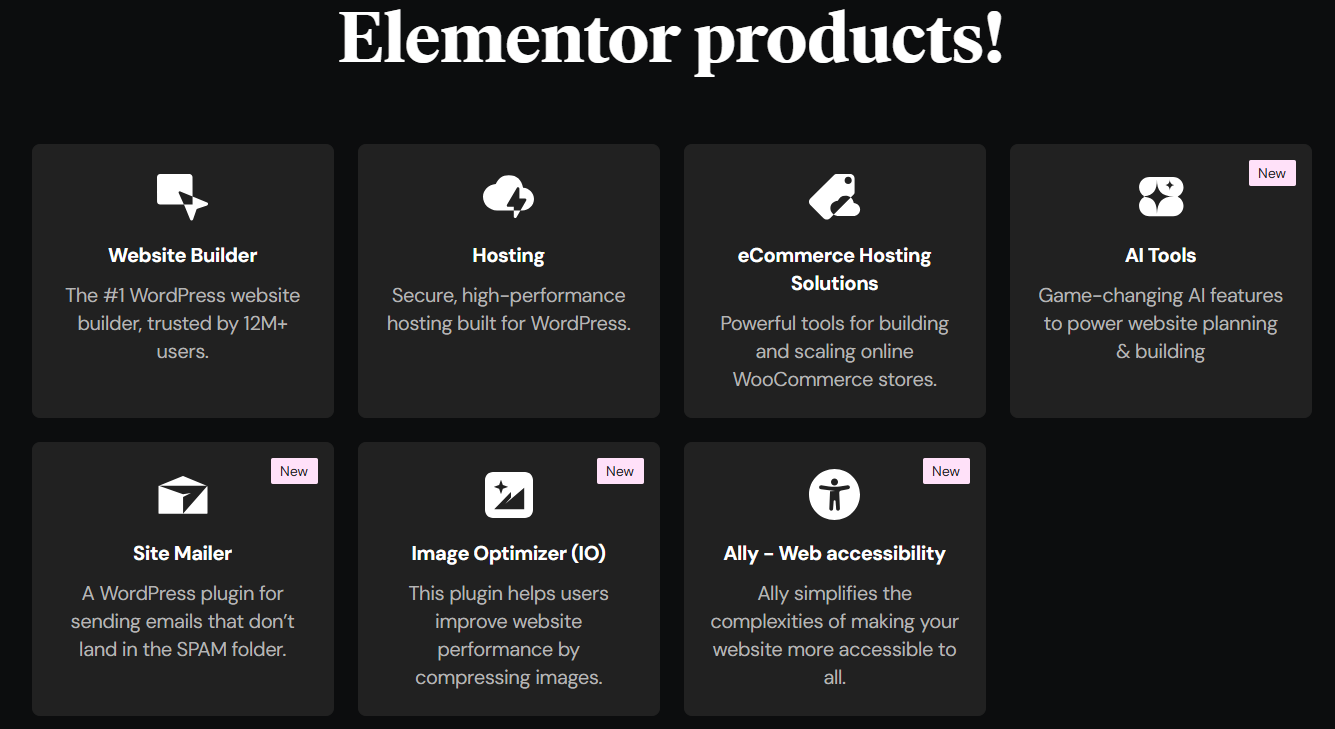
As an Elementor affiliate, you’re not limited to just one product. That’s what makes this program stand out. You can earn commissions on multiple products and even from repeat referrals, as long as the person you refer is making their first purchase of a specific product.
Here’s a breakdown of the core products you can promote—and why each one is worth your attention:
1. Elementor Website Builder
This is the flagship product that most users start with. It’s a powerful drag-and-drop editor for WordPress that lets anyone build professional websites without coding. Since it’s trusted by over 12 million websites globally, the brand already has strong recognition—which makes it easier to promote and convert.
2. Elementor Hosting
This is a fully managed WordPress hosting service built specifically for Elementor users. It combines speed, security, and ease of use in one package. Because it’s a higher-priced service, your commissions here can be significantly larger.
3. eCommerce Hosting
Tailored for WooCommerce stores, this version of Elementor Hosting is optimized for online shopping performance. It’s designed for creators or businesses running or planning to run an online store.
4. Elementor AI Tools
Elementor AI helps users speed up content creation with tools for writing, translating, and even generating design elements. These tools are built directly into the website builder, offering a seamless experience.
5. SiteMailer
This WordPress plugin allows users to send transactional and marketing emails that actually land in inboxes (instead of the spam folder). It’s a valuable add-on for anyone managing a serious website.
6. Image Optimizer (IO)
This plugin automatically compresses images on a website to improve loading speed. It helps boost site performance, SEO, and user experience without requiring much effort from the user.
7. Ally (Web Accessibility Plugin)
Ally helps make websites more accessible to users with disabilities. It simplifies compliance with global accessibility standards and improves overall user inclusivity.
Why This Matters for Affiliates
Each product you promote gives you another opportunity to earn. Here’s what makes this system powerful:
- Even if a user has already bought one product (like the Website Builder), you can still earn commission on their first purchase of another (like AI or Hosting).
- This structure opens the door to multiple commissions from the same referral—without needing them to click your link again.
- The variety of products lets you tailor your promotions to different types of content—speed, SEO, accessibility, hosting, or design.
By promoting more than just the main builder, you increase your chances of converting users across different needs—and maximizing your earnings over time.

How to Join the Elementor Affiliate Program?
If you’re considering becoming an Elementor affiliate, let me walk you through what to expect. I recently went through the application myself, and to my surprise, the process was pretty smooth.
Elementor does have a few requirements you need to meet before applying—but nothing unreasonable. In fact, I found them fair, especially compared to other big-name programs.
Here’s a quick breakdown of what they’re looking for:
- An Established Online Presence: Elementor expects you to have an existing audience—whether it’s a blog, YouTube channel, or social media account. It doesn’t need to be massive, but it should be active. A professional-looking site with published content definitely helps.
- Relevant Content: Your platform should focus on topics like web design, WordPress, digital tools, marketing, or anything related. This makes sense, since you’ll be promoting tools like Elementor’s Website Builder, Hosting, AI features, and more.
- A Basic Promotion Plan: They might ask you how you plan to promote Elementor. There’s no fixed traffic requirement, but showing that you know your audience and how you’ll promote helps a lot.
Once you’ve got these in place, applying is quick. The form only has four steps, and I’ll walk you through each one.
Step 1: Personal Information
I started by going to the Elementor page and clicked “Apply Now.”

The first step asked for my basic details: Full name, email address, phone number, and country.
After filling that in, I hit Next.
Step 2: Payment Method
Elementor pays via PayPal, so in this step, I entered my PayPal email address. There was also a checkbox to confirm that I understood the $200 minimum payout threshold. I ticked it and clicked Next again.

Step 3: Additional Information
This part covered how I plan to promote Elementor. You’ll need to provide:
- Your main sales channel (e.g., blog, YouTube, social media)
- Your main content URL
- Optionally, any other platforms you’ll use
- A short explanation of how you’ll promote Elementor
I also explained my content style and mentioned that I write product reviews and tutorials in the web tools niche.
Before moving on, there’s one last checkbox. You’ll confirm that:
- You won’t use pay-per-click (PPC) ads on Elementor’s brand name
- You won’t impersonate the brand or use unethical traffic methods
I checked that box and clicked Next.

Step 4: Account Details
Lastly, I created a username and a password. Then, I checked off the following agreements:
- I agree to the affiliate terms and conditions
- I have read Elementor’s PPC guidelines
- I have read Elementor’s trademark guidelines
Then I hit Submit Application.

Right after submitting, I saw this message:
“Thank you for submitting! We’ve got all your details now and will contact you shortly.”
That’s it! The review doesn’t take long.
How to Get Approved
Getting accepted into the Elementor Affiliate Program isn’t automatic, but it’s very doable if you approach it the right way. Based on my experience and what Elementor looks for, here’s how to position yourself for approval.
What Affects the Approval Process?
Focus less on perfection and more on proving that you can genuinely promote their products in a relevant, responsible way. Here’s what you should do:
- Have a Live, Content-Filled Platform: Whether it’s a blog, YouTube channel, or social account, make sure it’s active and shows signs of recent publishing. Elementor wants to see that you’re already producing value.
- Align Your Niche With Elementor’s Products: Make sure your content talks about topics like WordPress, website building, hosting, AI tools, or digital marketing. This shows you’re targeting the right audience.
- Add Content That Relates to Elementor or Similar Tools: Even a single post comparing builders or a video walkthrough of a website setup signals that you understand the space and can promote them effectively.
- Use a Professional Domain and Email: Signing up with a custom domain and a branded email (not Gmail or Yahoo) boosts your credibility and looks more serious to the review team.
- Explain Your Promotion Strategy Clearly: When the form asks how you’ll promote Elementor, don’t leave it vague. Mention your content style, traffic channels, and which products you’ll focus on—show that you have a plan.
These simple but strategic steps can make a huge difference. Elementor wants to work with people who promote with intention, not just anyone chasing a commission.
Make your application feel thoughtful and relevant, and you’re far more likely to get that approval email.
How Long Does It Take To Get Approved?
Elementor approves applications within a few business days, depending on your profile and content.
You’ll get an email once approved, and then you can log into your affiliate dashboard where you’ll find tracking links, banners, and campaign tools to start promoting.
Honestly, I found the whole thing really easy. The steps were clear, the questions made sense, and Elementor wasn’t asking for outrageous traffic stats or detailed analytics.
What stood out most was how streamlined everything felt—you don’t get buried in forms or unnecessary friction. If you already have an online presence and talk about anything related to websites or WordPress, you’ve got a solid shot.
How Payment Works: Payout Rules Explained
Elementor keeps the payout process straightforward, but there are a few important rules to know before you start expecting commissions to land in your account.
Here’s what to keep in mind:
- You only get paid for confirmed sales, not just clicks or signups.
- Elementor has a 30-day refund period, meaning commissions are held until that window passes.
- Once cleared, commissions are paid on a monthly basis, provided you’ve met the minimum payout amount.
Here’s a breakdown of how the payment system works:
| Payment Rule | Explanation |
| Payment Duration | Paid by the 20th of each month, after the 30-day refund period ends. |
| Requirement for Payment | Must have earned at least $200 in cleared commissions. |
| Mode of Payment | Payments are made via PayPal (or other approved methods upon agreement). |
| Minimum Withdrawal | You need a $200 minimum balance in commissions to receive a payout. |
Example:
Let’s say you refer someone who buys Elementor Hosting on March 5 and your commission is $450. Here’s how it plays out:
- Elementor will hold the commission until April 4 (to allow for refunds).
- On April 20, the payment is processed—if your total cleared commissions reach at least $200.
- Your $450 will be sent to your PayPal account that week.
But if your total cleared amount is, say, $150, it will roll over to the next month until you cross the $200 threshold.
This system rewards consistent promotion, and once you start getting monthly sales, the payouts become pretty reliable.
How to Promote Elementor Affiliate Program?
Once you’re approved as an Elementor affiliate, the next step is figuring out how to promote it effectively.
You don’t need to rely on pushy tactics or paid ads. Elementor gives you all the tools—and the brand already has credibility.
Here are proven ways to promote Elementor, even if you’re just getting started:
1. Write Blog Posts and Tutorials
One of the most effective ways to promote Elementor is through helpful content on your website. This could include:
- Step-by-step guides on building a WordPress site with Elementor
- Tutorials on specific features like Elementor AI or Hosting
- Comparison posts (e.g. Elementor vs Divi, Elementor Hosting vs Bluehost)
- Case studies showing real websites you built using Elementor
When done well, these posts rank in search engines, bring in consistent traffic, and convert readers into customers—without needing any ads.
Read our guides on using content for successful affiliate marketing:
2. Create YouTube Videos
Elementor is a visual tool, which makes it perfect for YouTube. Share videos such as:
- Beginner guides: “How to build your first website with Elementor”
- Feature demos: Show how Elementor AI or Image Optimizer works
- Full walkthroughs: Design a landing page or online store from scratch
- Tips and tricks: Advanced layout tutorials or customizations
Add your affiliate link in the video description and mention it naturally within the video.
3. Share in Your Newsletter
If you run a newsletter about WordPress, digital marketing, or online tools, Elementor is a strong fit. You can recommend it in your “Tools I Use” section, link to your tutorials or YouTube videos, highlight new features like AI, Hosting, or new plugin launches, or share seasonal promotions or discounts Elementor is running.
Since the cookie lasts 45 days, even a single mention can lead to earnings later.

4. Create a Resources Page
Many creators and educators use a “Tools” or “Recommended Resources” page on their website to list their favorite products. This is a great place to add Elementor with a short blurb about why you use it. This kind of evergreen content works passively over time.
5. Use Social Media the Right Way
While Elementor prohibits PPC advertising on brand keywords, you’re still allowed to promote organically on social platforms. Just make sure you use your own content and avoid any misleading claims or unauthorized coupons.
Learn how to use social media for affiliate marketing:
6. Run SEO-Focused Affiliate Campaigns
If you’re familiar with SEO basics, Elementor is a goldmine for long-tail keywords. Some ideas to target:
- “Best WordPress builder for beginners”
- “How to speed up my WordPress site”
- “How to send emails from WordPress reliably”
- “Elementor Hosting review”
- “What is Elementor AI?”
These types of keywords are often searched by people ready to take action—which means higher conversions and commissions for you.
Learn more about SEO and improve your affiliate marketing strategy:
Final Tip: Follow the Rules
Elementor is strict about not allowing PPC ads on brand terms, no fake discounts, and no impersonation. As long as you stay compliant, use original content, and promote ethically, you’re good to go.
Elementor Affiliate Program Alternatives
1. HostAdvice Affiliate Program
Commission Rate: Up to $200 per sale
Cookie Duration: Varies by hosting provider (typically 30 days or more)
Products Offered: Web hosting reviews and comparisons
Benefits:
- Access to a large number of hosting providers under one affiliate platform
- Higher earning potential depending on the host referred
- Great entry point for beginners learning affiliate marketing
- Useful for content focused on hosting reviews, WordPress setups, or site speed
Why it’s a solid alternative: The HostAdvice affiliate program gives you flexibility. You’re not promoting just one product—you can link to reviews or rankings that compare multiple trusted hosting brands, increasing your chances of conversion. It’s especially useful if your audience is actively shopping for a hosting solution.
2. Shopify Affiliate Program
Commission Rate: Up to $150 per referral
Cookie Duration: 30 days
Products Offered: E-commerce website builder and platform
Benefits:
- A recognized global brand with a strong reputation
- Commission applies when users sign up for a paid Shopify plan
- Easy to promote through e-commerce tutorials and business guides
- Low payout threshold ($10 minimum)
Why it’s a solid alternative: Shopify is one of the biggest players in e-commerce, and the brand already carries trust. For creators covering online store building, side hustles, or product launches, it fits naturally. While the commission is a flat payout (not tiered like Elementor), the barrier to entry is low and conversion rates are strong.
3. Squarespace Affiliate Program
Commission Rate: $100 to $200 per subscription
Cookie Duration: 45 days
Products Offered: Website builder, blogging tools, e-commerce platform
Benefits:
- Long cookie duration for higher attribution chance
- High commissions with no cap on referrals
- Frequent product and feature updates
- Simple platform, easy to promote to beginners
Why it’s a solid alternative: Squarespace appeals to creatives, bloggers, and small business owners. If your content targets users who value design and simplicity over technical flexibility, this is a great match. The commissions are on par with Elementor, and the extended cookie window gives you more time to earn from each click.
Conclusion
The Elementor Affiliate Program combines high commissions, a trusted global brand, and a growing product ecosystem—making it a strong choice for content creators, marketers, and web professionals looking to monetize their audience.
With up to 65% commission and earnings of up to $799 per referral, it’s one of the most rewarding affiliate programs in the website-building space.

