


In this era of prevailing cyber threats, businesses must rely on Offensive Cyber Security. It provides a proactive approach, identifying vulnerabilities before any exploitation happens.
As we progress, notice the tools and techniques of Offensive Cyber Security. These can test defenses, simulate real-world attacks, and fortify digital assets against attacks..
In cybersecurity, prevention starts with a secure digital foundation. The best website builders include advanced security features, from SSL encryption to DDoS protection, helping you keep your data safe. Explore our recommended website builders to create strong, secure, and reliable online platforms.
Build Secure, High-Performance Websites with the Best Builders
| Provider | User Rating | Recommended For | |
|---|---|---|---|
 | 4.6 | Beginners | Visit Hostinger |
 | 4.4 | Pricing | Visit IONOS |
 | 4.2 | Design | Visit Squarespace |
What is Offensive Security?
Offensive security is a proactive approach to cybersecurity. It is also known as ethical hacking or penetration testing. Instead of waiting for attacks, seek out weaknesses before exploitation by threat actors.
It involves testing systems, networks, and applications from an attacker’s perspective. The goal is to find and fix vulnerabilities. Security teams use the same tools and techniques that malicious hackers use.
But these teams do it with authorization and the goal of strengthening defenses. The testing reveals what otherwise remains hidden until an actual incident occurs.
The practice is crucial for compliance with SOC 2, ISO 27001, and HIPAA frameworks. These standards recognize proactive testing’s protection over reactive measures.

Offensive and Defensive Security: Key Differences Explained
Understanding the distinction between offensive and defensive cybersecurity helps build comprehensive protection strategies.
Offensive Security
It focuses on the practice of simulating attacks to find vulnerabilities. It’s like the “red team” trying to break in using real-world attack methods and tools.
These cybersecurity professionals adopt an attacker’s perspective. They look for ways to gain access to systems and exploit weaknesses. They do so using automated tools and techniques to test every possible entry point.
Defensive Security
This focuses on preventing, detecting, and responding to attacks. It’s the “blue team” building and defending with firewalls. It does so along with antivirus software and incident response plans.

When incidents occur, blue teams focus on implementing other security measures, like:
- Intrusion detection systems
- Monitoring networks for suspicious activity
- Developing response procedures
The most effective organizations combine both approaches. Offensive testing validates whether defensive measures work under real attack conditions.
Why a Proactive Offensive Security Strategy is Crucial
The financial stakes make offensive cybersecurity testing an essential investment.
Financial Impact
The global average cost of a data breach reaches $4.88 million. This figure includes;
- Direct costs (e.g., incident response, legal fees, and regulatory fines)
- Indirect costs ( e.g., lost business and reputation damage)
Proactive testing prevents these costs by finding problems before attackers do. Fixing risks during testing costs a fraction of recovering from an actual breach.
The investment in offensive security operations pays for itself many times over. It happens when it prevents even a single major incident.
Reputation Management
Major breaches lead to loss of customer trust and business failure. Companies like National Public Data experience devastating impacts when sensitive data gets compromised.

Customers expect protection for their important data. Failure to protect this information results in irreversible damage. Offensive testing helps maintain your customers’ trust.
Regulatory Compliance
SOC 2, ISO 27001, and HIPAA need regular offensive security testing. These are mandatory for organizations handling sensitive information.
Compliance auditors expect to see regular vulnerability assessment and penetration testing. Organizations that skip these requirements face penalties. They may also lose the ability to operate in certain industries.

Namecheap
The 10 Best Offensive Cybersecurity Tools for 2025
1. Mindgard
- Best For: AI red teaming and penetration testing of AI/ML systems. Mindgard specializes in the emerging field of AI security testing. Today, organizations rely more on artificial intelligence and machine learning systems. These platforms present new attack paths that traditional security tools can’t assess.
- Key Features: The platform offers to find vulnerabilities in AI platforms and LLMs. The automated approach can discover weaknesses that manual testing might miss.
- Integration: Mindgard integrates with CI/CD pipelines. It provides a Burp Suite extension for advanced web and AI threat detection. It allows security teams to incorporate AI testing into existing workflows.
- Type: Commercial SaaS solution with some open-source components for community use.
2. Scytale
- Best For: Tailored penetration testing with a focus on compliance frameworks. Scytale addresses the specific needs of organizations that must meet compliance requirements. Many security tools provide generic testing. But Scytale customizes its approach based on your industry and regulatory needs.
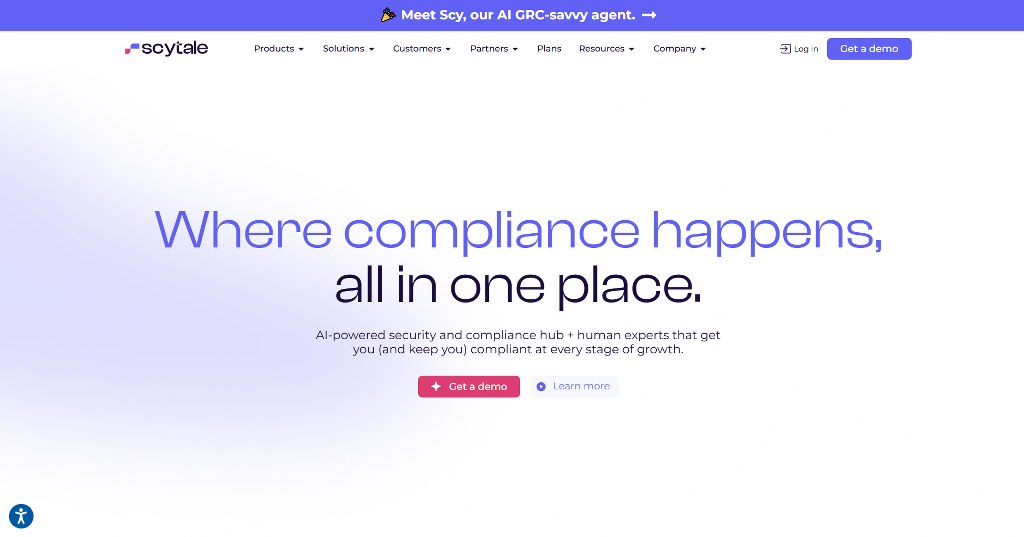
- Key Features: The platform combines automation with expert manual testing. It helps SaaS businesses meet SOC 2, ISO 27001, and GDPR requirements. The approach ensures comprehensive coverage while maintaining depth.
- Capabilities: Scytale performs black box, white box, and gray box testing. It does so across web apps, APIs, cloud infrastructure, and internal networks. With this approach, teams don’t need many tools to cover different scenarios.
- Type: Commercial solution with dedicated support for compliance-focused organizations.

3. Metasploit
- Best For: Exploit development and validation. Metasploit is popular among security professionals for risk assessment and developing custom exploits. It provides a structured approach to exploit development and testing.
- Key Features: It includes a collection of exploits, payloads, and modules to test and confirm vulnerabilities. The database contains thousands of known exploits you can customize for specific targets.
- Use Cases: Serves for network security assessments, payload generation, and post-exploitation analysis. The tool excels at demonstrating the real-world impact of discovered risks.
- Type: Open source with commercial support options.

4. Burp Suite
- Best For: Comprehensive web application security testing. Burp Suite is now like web application testing tool among cybersecurity professionals. The platform provides all you need to assess modern web applications and APIs.
- Key Features: The integrated platform streamlines testing and reduces the learning curve via:
A proxy for intercepting traffic
An automated vulnerability scanner and
Tools for customized attacks.
- Benefits: Burp Suite has both accuracy and speed. It’s useful in detecting risks and automating repetitive testing tasks. It generates fewer false positives, saving valuable time during assessments.
- Type: Commercial solution with a free Community Edition having basic functionality.
5. Kali Linux
- Best For: An operating system for penetration testing and security auditing. Kali Linux serves as the foundation for most offensive security operations. The specialized Linux distribution comes pre-configured with everything security teams need.
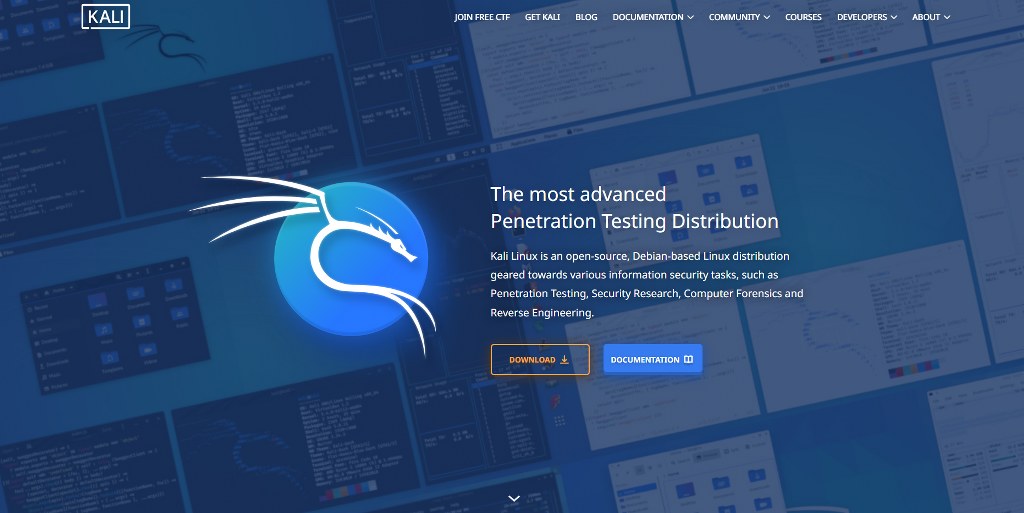
- Key Features: This Debian-based Linux distribution comes with over 600 offensive security tools. These tools cover every aspect of security testing, like:

Vulnerability scanning
Password cracking and
Network sniffing.
- Benefits: Kali Linux is customizable and completely free, making it the global standard. The operating system receives regular updates with new tools and security patches.
- Type: Open source with extensive community support and documentation.
6. Tenable Nessus
- Best For: In-depth vulnerability assessment and scanning. Nessus provides scanning capabilities that identify vulnerabilities across the entire infrastructure. The tool’s extensive plugin library ensures coverage of the latest threats.
- Key Features: Nessus detects misconfigurations, default passwords, and missing patches. It can assess everything from traditional servers to cloud infrastructure and IoT devices.
- Capabilities: The platform features over 450 pre-configured templates. It also provides coverage for over 47,000 unique IT assets. Such coverage ensures you don’t miss important vulnerabilities during assessments.
- Type: Commercial solution with different licensing tiers.
7. Cobalt Strike
- Best For: Advanced adversary simulation and red team operations. Cobalt Strike specializes in simulating sophisticated, persistent threats and threat actors. It helps red teams conduct exercises that test your detection and response capabilities.
- Key Features: The tool mimics attackers with post-exploitation agents (Beacons). These support command execution, keylogging, and lateral movement. These capabilities allow red teams to simulate complex, multi-stage attacks.
- Stealth: Cobalt Strike facilitates covert communication over multiple protocols (HTTP, DNS, SMB). It also allows for network indicator customization to evade detection. The stealth capability makes it ideal for testing security monitoring systems.
- Type: Commercial solution used by professional red teams and security consultants.
8. Acunetix
- Best For: Automated web and API vulnerability scanning. Acunetix focuses more on web application and API security. It provides deep scanning capabilities that detect vulnerabilities, both common and complex ones.
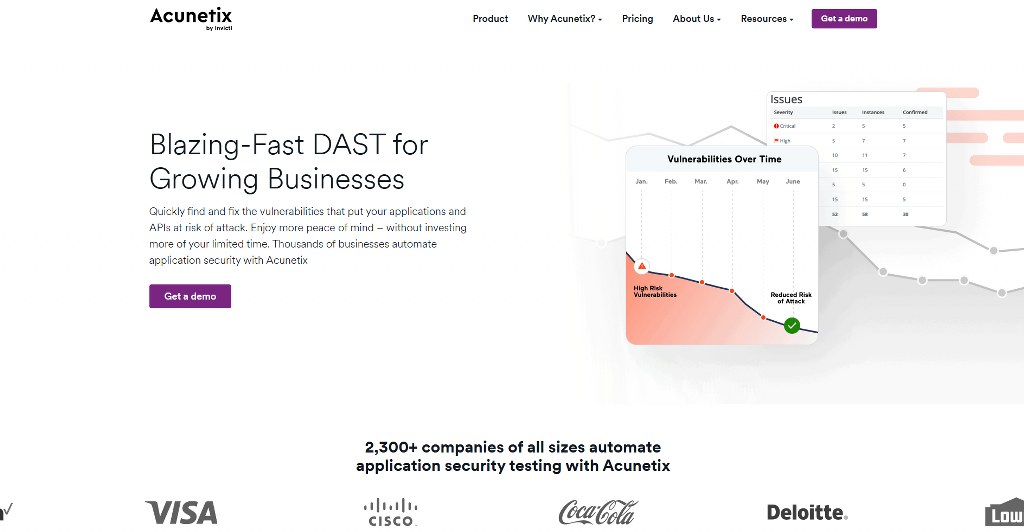
- Key Features: It detects over 7,000 vulnerabilities. It includes the OWASP Top 10, SQL injections, and XSS. It also features AcuMonitor for detecting out-of-band that others might miss.
- Efficiency: Acunetix pinpoints the exact location of vulnerabilities. It also provides remediation guidance to save developers time. The reporting helps your team understand and fix security vulnerabilities.
- Type: Commercial solution with flexible licensing options for different organization sizes.

9. Wireshark
- Best For: Network protocol analysis and traffic capture. Wireshark provides essential network analysis capabilities. It helps you understand network traffic patterns and identify suspicious activities. The tool captures and analyzes network packets in real-time.
- Key Features: It captures and browses traffic running on computer systems. The interface provides detailed packet analysis with filtering and search capabilities.
- Use Cases: Wireshark diagnoses network issues, identifies suspicious activity, and analyzes communication protocols. The tool proves invaluable for understanding how attacks move through networks.
- Type: Open source with extensive documentation and community support.

10. Social-Engineer Toolkit (SET)
- Best For: Simulating human-focused attacks. SET addresses the human element of cybersecurity within an organization. Testing employees’ preparedness to recognize and respond to social engineering attempts.
- Key Features: The Python framework tests an organization’s susceptibility to social engineering attacks. The toolkit includes templates and automation features for creating realistic attacks.
- Goal: SET helps assess an organization’s human vulnerabilities and strengthen security. The results provide valuable insights into where you’ll need extra training.
- Type: Open source with regular updates and an active development community.

Core Offensive Security Techniques
Consider three crucial offensive security techniques.
Penetration Testing & Red Team Operations
Penetration testing simulates a cyberattack against your systems to find exploitable vulnerabilities. It usually targets specific systems or apps within a defined scope and timeline.
To reveal different vulnerabilities and provide unique insights, Pen testing can happen as:
- Black box test (no prior knowledge of the target)
- White box test (full knowledge of systems and code) or
- Gray box test (some knowledge provided)
The testing process follows a structured methodology that includes:
- Reconnaissance
- Scanning
- Gaining access
- Maintaining access and
- Covering tracks
The approach ensures comprehensive coverage while documenting findings for remediation.
Red teaming represents a more comprehensive exercise. It mimics a real-world adversary’s tactics and procedures over a longer period. Red team exercises test your detection and response capabilities.
It often involves social engineering, physical security testing, and advanced persistent threat simulation. Red teams operate with minimal restrictions. They use whatever methods are necessary to achieve their objectives.

The Rise of AI in Offensive Security
Artificial intelligence is transforming how offensive cybersecurity teams conduct assessments and simulate attacks. These technologies enable more sophisticated and realistic testing scenarios.
- AI-Powered Reconnaissance: Machine learning algorithms automate and enhance Open-Source Intelligence (OSINT) gathering. AI can process vast amounts of public information to identify potential vulnerabilities. It also identifies vulnerable systems and attack vectors faster than human analysts.
- AI-Generated Malware: Neural networks can create custom malware for bypassing traditional security. These AI-generated threats adapt to defensive tactics and can evade detection systems.
- Sophisticated Social Engineering: AI helps craft convincing phishing emails. It does so even for audio or video deepfakes used for manipulation. These technologies make social engineering attacks harder to detect.
The integration of AI into offensive security requires defenders to adapt their strategies. It also requires investing in AI-powered defensive tools for effective protection.
Vulnerability Scanning
It uses automated tools to scan networks, systems, and apps for known vulnerabilities. The technique provides broad coverage across large infrastructures.

Scanners identify missing patches, misconfigurations, and other common exploitable vulnerabilities. The automated scanning allows teams to assess thousands of systems quickly and efficiently.
But vulnerability scanning provides a baseline for remediation efforts. It prioritizes the most critical risks. Teams must follow up scanning with manual verification and testing to confirm vulnerabilities.
Modern vulnerability scanners streamline the remediation process. They do so by integrating with patch management systems and configuration management tools. The integration helps organizations maintain a better security posture over time.
Building Your Secure Digital Presence
Yes, these advanced tools protect your infrastructure. But your public-facing website often becomes the first target for attackers. Building your website on a secure foundation guarantees overall security.
For beginners, the best website builders provide an excellent choice. Platforms like Hostinger and IONOS offer easy ways to launch a professional site.

They handle security updates, monitoring, and basic threat protection automatically. The approach reduces the burden on organizations that lack dedicated security teams.
For complex needs, use a self-hosted WordPress site with one of the best web hosting providers. It gives you full control over your security configuration.
Self-hosted solutions need more technical expertise but offer greater flexibility. Organizations can customize their security measures and integrate with existing infrastructure.
Consider implementing WordPress security measures for this popular content management system. WordPress powers millions of websites, but requires proper configuration to remain secure.
For e-commerce operations, you need specialized security considerations. These platforms handle sensitive customer data that attracts malicious activities.
AI and cybersecurity evolve with chatbots and security presenting new challenges and opportunities. Organizations must consider these technologies when planning security strategies.
General website security principles apply regardless of platform choice. These include regular updates, strong authentication, and continuous monitoring.
For entrepreneurs, consider opportunities to start a cyber security business. It should also serve the growing demand for offensive security services.
Conclusion
Offensive security has evolved from a niche specialty. It is now a fundamental component of mature cybersecurity programs. Continuous identifying and fixing vulnerabilities reduces the risk of costly data breaches.
The tools and methods in this guide provide the foundation for building resilient defenses. And these are capable of withstanding modern cyber threats.
Of course, with the growth of AI today comes an increase in cyber attacks. It creates an opportunity for you to start a cybersecurity business of your own.

Next Steps: What Now?
You should incorporate offensive cybersecurity into your website. Remember that:
- Offensive security is an approach to cybersecurity that requires you to find weaknesses.
- Offensive testing validates whether defensive measures work under real attack conditions.
- Proactive offensive security cuts costs, builds customer trust, and meets regulatory compliance.
- Pen testing, AI integration, and vulnerability scanning are techniques for offensive cybersecurity.
- Having a fast and secure digital presence ensures that your data remains protected.
Further Reading & Useful Resources
Consider other helpful guides that can help boost your security:
- Cloud Server Security: Explore best practices and tools for protecting sensitive data.
- Perimeter to Identity Centric Security: Consider how modern security prioritizes data protection.
- Types of Web Attacks: Examine 15 web attacks that pose a risk to individuals and businesses.
- Make a Chatbot: Learn to create a chatbot without basic knowledge of coding.
- Website Security: Discover some easy-to-implement tips for securing your website from threats.


