


Creating a global presence depends on scaling European VPS to suit your needs. Your server will have issues without proper planning.
This guide explains how to upgrade resources and use cloud architectures. It also covers best practices for upgrading your server as your business grows.
Scaling a VPS without downtime requires infrastructure designed for flexible upgrades and stable performance. The comparison table below highlights European VPS hosting providers that allow you to expand CPU, RAM, and storage as your project grows. This makes it easier to handle traffic spikes and growing workloads without service interruptions. Explore our recommended VPS hosting options.
European VPS Hosting Providers That Support Seamless Resource Scaling
| Provider | User Rating | Recommended For | |
|---|---|---|---|
 | 4.8 | Scalability | Visit Kamatera |
 | 4.6 | Affordability | Visit Hostinger |
 | 4.7 | Developers | Visit IONOS |
Understanding the Need for Scaling European VPS
You need to understand why upgrading your server resources is crucial.
Why Scalability Is Critical When Business Grows
Certain events can lead to traffic spikes at any time. This makes it crucial for your digital presence to adapt quickly.
Here are the reasons to scale:
- Traffic adaptation: Scalability allows your site to adapt to fluctuations. Without it, your site slows down or crashes during peak moments. It could result in customer losses and a decline in revenue.
- Resource flexibility: You can add CPU cores or RAM as your project gains traction. Cloud services allow you to do this without upgrading the entire setup.
- Cost efficiency: Start with what you can afford. Then, you can scale as demand increases. This stops you from paying for capacity that sits idle.
- Availability: Cloud infrastructure improves your site’s availability. Having multiple servers presents a backup to balance the load if one experiences issues.
Moving Beyond Shared Hosting to Get More Resources

Basic websites have no issues using shared hosting. However, you need to compete with several sites to access the same resources. This is one of the major differences between VPS and shared hosting.
A Virtual Private Server guarantees your site’s performance. Only you can access your dedicated portion of CPU, RAM, and storage.
You need to create migration periods on traditional hosting. Your site goes offline during this period. But VPS hosting providers let you scale instantly without downtime.
With a VPS, you have complete control over your environment. This allows you to install specific software and configure security settings. You can even adapt it to your business requirements.
Mechanisms of Scaling Without Downtime
Scaling European VPS hosting without going offline is a superpower you need to understand.
Vertical vs. Horizontal Scaling Strategies
You can use two approaches to grow your infrastructure:
- Vertical scaling: This approach boosts the power of your existing server. It involves adding more RAM, increasing CPU cores, or expanding disk space.
- Horizontal scaling: This approach doesn’t make one server stronger. Instead, you add more servers to your network. It uses load balancing to share traffic across these machines.
You can gain unlimited potential from combining both strategies. Cloud servers allow you to scale vertically to gain immediate power. You can also scale horizontally to distribute workload across your infrastructure.
Luckily, modern cloud provider control panels let you easily adjust resources. You can complete basic scaling operations without having technical expertise.
How Cloud Servers Enable Seamless Upgrades

Advanced virtualization technology ensures smooth upgrades. This technology separates your virtual servers from physical hardware:
- Zero-downtime upgrades: You experience no downtime because your VPS runs in a flexible environment. You can increase CPU allocation, RAM, storage, or network bandwidth. Users will continue to access your services while this is ongoing.
- Instant provisioning: KVM virtualization allows you to instantly allocate more resources. The system does this from available capacity. It doesn’t even need hardware installation or manual configuration.
- Click-to-scale functionality: This feature appears on the dashboards of hosting providers. You only need to drag a slider to increase memory. Then, choose a new CPU tier from a dropdown menu. Some systems allow you to expand storage with a single button.
- Production safety: This becomes compulsory as your business grows. Your services must remain available during upgrades to protect your reputation and revenue. This is a specifically designed reliability for businesses that need constant uptime.
The Strategic Advantage of European Data Centers
European data centers don’t only expand with growing businesses. Using them offers you so many benefits you can imagine.
Optimizing Latency with Strategic Data Centers
Speed depends on the physical distance between your servers and users.
The distance between users and servers impacts experience. Someone in Berlin connecting to a server in Frankfurt experiences faster load times than across the Atlantic.
Key European locations allow you to meet your target audience. London connects Europe to America. Madrid, Stockholm, Milan, and Paris give audiences within these regions low latency.
Top services offer 100 Gbps connections for each location. This comes with BGP routing. It ensures faster data transfer and optimal performance.
Having multiple data centers makes it easier to enter foreign countries. You can deploy static content near specific user bases. Meanwhile, your main machine stays centralized.
Ensuring GDPR Compliance and Data Residency

European hosting comes with strict data protection regulations you must obey:
- Legal requirements: The GDPR controls data laws in Europe. It makes it compulsory for data to remain within the European Economic Area. European data centers meet these standards.
- Compliance standards: Look for providers with the right certificates. These include ISO, SOC audits, and PCI DSS validation.
- Verified centers: These centers have all it takes to protect your data and users.
- Local governance: Each country has its laws. Data centers in Madrid comply with specific Spanish regulations. Similarly, Frankfurt facilities use German standards. Businesses need this local laws to serve specific markets.

Ultahost
Technical Features That Support Stability
Let’s look at the technical features that make your server stable after an upgrade.
Leveraging DDoS Protection and Network Security
European traffic evolves to face emerging attack patterns:
Traffic safety: DDoS protection is a traffic filter. It removes harmful traffic before they reach your servers. It only keeps real users connected during attacks.
Network redundancy: Tier-4 centers ensure stable networks. Traffic goes to alternate paths when a connection has issues.
Secure architecture: This includes private networks. The network separates your server from public threats. Fault-tolerant standards are backups
Disaster Recovery and Redundancy Protocols
Plan for failures to prevent disasters from affecting your operations:
- Hardware redundancy: This appears in many forms. N+1 Power and Chiller redundancy means readily available backup power and cooling systems. They activate immediately when primary systems fail.
- Data safety: Triple replication stores your data across three separate storages. Your data remains accessible even if you lose one drive.
- Tier ratings: Tier III facilities offer 99.9% uptime guarantees. Tier IV centers reach 99.95%. It has a fault-tolerant infrastructure that can handle issues without downtime.
- Financial backing: SLAs give you financial backing if uptime falls. Some providers offer credits or refunds for the inability to meet guaranteed levels.
Evaluating Your Hosting Provider for Growth
Before scaling European VPS, make sure your provider offers the features you need.
Key Features to Look for in a Hosting Provider
Some VPS providers offer specific capabilities that make them stand out:
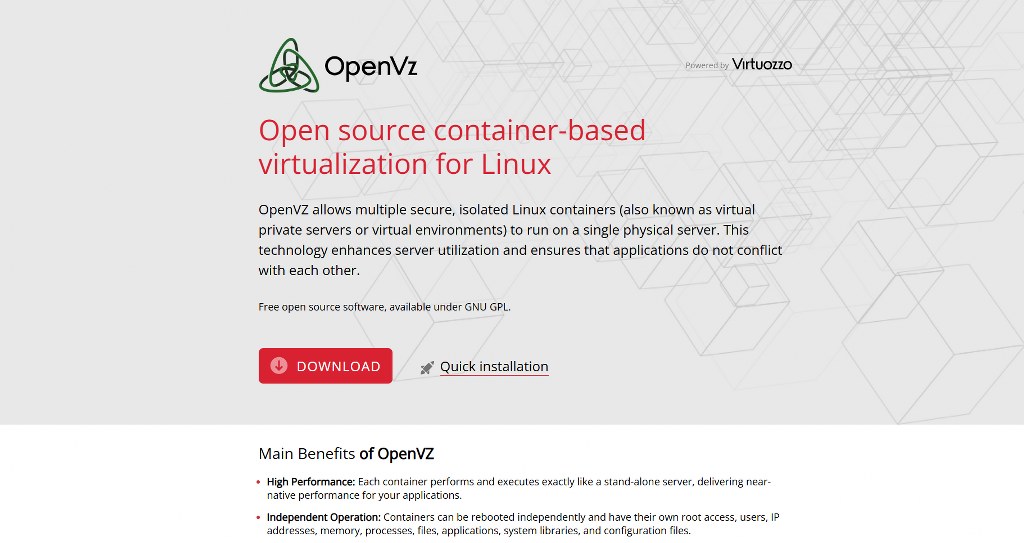
- Virtualization technology: KVM virtualization provides better performance. It is also easier to scale than older OpenVZ systems. It gives full control over your virtual environment with less overhead.
- Storage: NVMe SSDs are multiple times faster than regular SATA drives. This makes it easier and more effective to scale resources.
- Billing models: Pay-as-you-go options charge hourly or per 10-minute intervals. This allows you to test configurations without long-term payments. This ease helps to reduce costs while testing different resource allocations.
- Support: Look for a support team with 24/7 availability. They should have response times under 15 minutes. The team must also have in-depth knowledge of cloud servers to guide you through complex situations.

Dedicated Servers vs. Cloud VPS for Scalability
Let’s see how dedicated servers and cloud VPS work for upgrades:
Flexibility
You need to change the physical hardware to upgrade bare-metal servers. In contrast, cloud infrastructure allows “diagonal scaling.” This means using software to adjust many resources at once.
Deployment speed
Cloud VPS instances deploy in 40 seconds. Dedicated servers might take hours or days to procure and configure.
Management
Fully managed services let you focus on your business. You can also hire experts on Fiverr and Upwork for specific configurations. For example, Apache Kafka or complex network setups.
Top Providers for Scaling a European VPS
Let’s explore some of the best VPS hosting Europe offers.
Serverspace: Rapid Deployment and Flexible Billing

Serverspace offers instant scalability for businesses. Some of its features include:
- Speed: Its servers deploy in 40 seconds.
- Billing: It uses a pay-as-you-go model that charges every 10 minutes. This approach means you’re paying for only what you use.
- Infrastructure: Serverspace operates 8 global data centers, including EU locations. Its SPA architecture control panel allows you to easily manage your server. You can also enable two-factor authentication for more security.
- Hardware: It uses 3.1 GHz 2nd Gen Intel Scalable processors to deliver high performance for heavy workloads.
Kamatera: Customization and Regional Coverage
Kamatera offers broad European coverage with excellent uptime guarantees.
- Uptime: It reaches 99.95% through its SLA. This reliability is perfect for mission-critical applications.
- Locations: Kamatera has a broad European presence in London, Madrid, Amsterdam, Stockholm, Frankfurt, and Milan.
- Scaling: It enables a diagonal scaling solution to adjust CPU, RAM, and storage at once. The server console makes up-and-down adjustments simple.
- Add-ons: Kamatera’s marketplace includes pre-configured apps like Kubernetes, cPanel, and Python environments. These apps speed up deployment for everyday use cases.

Fermalen: Enterprise-Grade Hardware
Fermalen provides premium infrastructure with unmatched performance.
- Specs: It features Intel Xeon processors, NVMe SSDs, and DDR4 ECC RAM. This enterprise-grade hardware delivers premium performance for demanding workloads.
- Network: Its infrastructure provides multiple 100 Gbps connections per location. This bandwidth prevents network bottlenecks.
- Facilities: It operates in Tier-4 data centers across Frankfurt, Amsterdam, London, and Paris.
- Support: You can get multi-language assistance in English, German, French, and Dutch. This way, European businesses interact in their preferred language.

Comparison of Scaling Features Across Providers
The table below compares each provider’s scaling features:
| Feature | Serverspace | Kamatera | Fermalen |
| Zero-Downtime Scaling | Yes (CPU/RAM/Storage) | Yes (Click-to-scale) | Yes (Flexible options) |
| European Locations | Amsterdam (AM2) | London, Madrid, Amsterdam, etc. | Frankfurt, Amsterdam, London, Paris |
| Uptime SLA | 99.9% | 99.95% | Not specified |
| Billing Interval | Every 10 minutes | Hourly/Monthly | Not specified |
| Deployment Time | 40 seconds | Instant | Not specified |
Best Practices for Managing Scalable Infrastructure
You must be able to manage your hosting environment to make upgrades easier. We have highlighted the best practices to achieve this.
Monitoring and Managing Resources via Control Panel
You need the following for effective server management:
- Visibility: Real-time monitoring shows you CPU and RAM usage patterns. Track trends that show when you’ll need to upgrade before it affects performance.
- Ease of access: Modern panels like Serverspace’s SPA are user-friendly. This gives you complete control over your environment. Two-factor authentication prevents unauthorized access.
- Operating systems: Infrastructure support includes Linux, Windows, and FreeBSD. These varieties support different project demands.
- Automation: You can use APIs or console tools. You only need to configure automatic scaling based on a set limit. Schedule resource addition when CPU usage exceeds 80%. You can then scale down during quiet periods.
Preparing for Traffic Spikes
Plan your scaling to prevent problems. Here’s how:
- Proactive scaling: This means adding capacity before expected events. For example, scaling up before a marketing campaign or flash sale.
- Load balancing: This shares incoming requests across multiple servers. This prevents load on one VPS while expanding your available capacity.
- Speed testing: Provider-specific tools help to verify network performance. Kamatera offers regional speed test links. You can use this to check connectivity at different locations.
Launch Your Digital Presence
At some point, creating a professional website becomes compulsory. In addition, the best VPS providers offer the expansion your project deserves. The right provider allows you to test, scale, and succeed without limitations.
If you don’t know where to start, beginner-friendly website builders can help. Top options like Hostinger and IONOS offer easy setups to reduce the burden.

Combine this with the best web hosting to create a solid foundation. Then, you can proceed to a scalable VPS setup.

Conclusion
Scaling European VPS successfully requires the right tools and strategy. By monitoring resources, you can upgrade to support unlimited traffic and seamless integration. But it is vital to know how to upgrade your Linux VPS.
Next Steps: What Now?
Follow these steps to scale your VPS:
- Create a professional website.
- Choose a strategic data center location.
- Utilize DDoS and network security.
- Set up protocols for disaster recovery.
- Choose a scalable European VPS provider.
- Keep monitoring and managing your resources.
- Create scaling plans for spikes.
- Scale up or down based on traffic fluctuations.


