What Is Java Hosting?
Java hosting refers to web hosting services specifically optimized to run Java applications. Unlike standard hosting, Java hosting provides the server-side environment required to deploy Java-based websites, web apps, and services—typically using technologies like Apache Tomcat, WildFly, or GlassFish.
Java is a powerful, object-oriented programming language used to build enterprise-grade applications, dynamic websites, RESTful APIs, and backend systems. But because Java requires a specific runtime environment (JVM – Java Virtual Machine), not all hosting providers support it. That’s where Java hosting comes in—offering preconfigured servers that support Java EE, servlet containers, JSP, and frameworks like Spring or Hibernate.
If you’re developing or running Java-based apps, choosing a reliable Java hosting provider ensures your project runs efficiently, scales with demand, and stays secure.
Who Needs Java Hosting?
Java hosting is ideal for developers, enterprises, and anyone building dynamic, scalable applications in Java. Here’s a breakdown of who benefits most from the best Java hosting services:
- Java Developers: Whether you’re deploying a simple servlet or a full-stack Spring Boot application, you need hosting that supports Java runtimes, WAR/JAR deployment, and remote access.
- Enterprise & SaaS Platforms: Many enterprise applications are built in Java due to its security, scalability, and cross-platform support. Java hosting enables businesses to deploy complex systems like CRMs, ERP tools, and portals.
- eCommerce Platforms: Some custom-built or legacy eCommerce systems run on Java. Hosting tailored for Java ensures high availability and strong backend performance.
- Educational & Government Portals: Java’s long-term support and high-security standards make it ideal for institutional systems that require reliability and data protection.
- API & Microservices Developers: Java is widely used for backend development. If you’re building APIs, microservices, or web services using frameworks like Spring or Jakarta EE, Java hosting gives you the infrastructure to deploy and scale efficiently.
If your stack includes Java technologies, using a general-purpose host won’t cut it. Java hosting providers offer the right setup—so your apps load faster, scale easily, and perform under pressure.
How Does Java Hosting Work?
Java hosting works by providing a server environment where the Java Virtual Machine (JVM) can run your application code. Unlike PHP or static HTML hosting, Java hosting involves more complexity, as it typically requires servlet containers or full application servers.
Here’s how Java hosting works from deployment to delivery:
- You Choose a Java Host: Select a provider that supports Java environments, such as Apache Tomcat, WildFly (JBoss), or GlassFish, and allows WAR or JAR deployment.
- You Upload Your Application: You deploy your Java app—usually in the form of a WAR or JAR file—via the control panel, SSH, or FTP.
- The Host Configures JVM & Application Server: Your server instance runs the Java app within a container (e.g., Tomcat), handling memory allocation, execution, and runtime dependencies.
- A User Sends a Request: When someone visits your app or site, the Java server processes that request dynamically using the compiled Java code and delivers the response.
- The Server Delivers Dynamic Content: The application server uses Java servlets, JSP files, and backend logic to render and return content to the user’s browser.
What Makes Java Hosting Work?
- JVM (Java Virtual Machine): Core runtime engine that runs your Java code.
- Servlet Container: Handles Java servlets and JSP execution. Examples include Apache Tomcat and Jetty.
- Application Server: Full-featured server environments like WildFly or GlassFish that support Java EE standards.
- SSH Access: Essential for developers needing command-line control, build tools (like Maven), or Git integration.
- Dedicated Resources: Java apps are often resource-intensive. The best Java hosting includes generous CPU and RAM allocations for smooth performance.
- Control Panel: Some providers offer Plesk, cPanel (with Java plugins), or custom dashboards to manage deployments and server settings.
Unlike simpler hosting solutions, Java hosting requires fine-tuned environments for memory management, thread handling, and app server configuration—all of which are built into the best Java hosting plans.
How We Ranked the Best Java Hosting Providers
Finding reliable Java hosting can be challenging—many mainstream hosts don’t support Java apps. To help you choose the right provider, we tested and compared dozens of platforms specifically optimized for Java deployment. Here’s what we looked at:
✅ Java Runtime & Framework Support
We prioritized hosts offering full support for the latest JVM versions, servlet containers (Tomcat 10+), and Java EE-compatible application servers. Compatibility with frameworks like Spring, Hibernate, and Maven was also essential.
✅ Performance & Scalability
Java applications can be resource-heavy. We tested each host’s server speed, load handling, and ability to scale using VPS, cloud, or dedicated environments tailored for Java apps.
✅ Deployment Tools
We evaluated ease of WAR/JAR deployment, SSH access, Git integration, and build tool compatibility (e.g., Maven, Gradle). A great Java host should streamline your deployment pipeline.
✅ Server Uptime & Reliability
We monitored uptime over 30+ days to ensure each provider met or exceeded 99.9% uptime, essential for production apps.
✅ Customer Support
We contacted support teams to test their ability to assist with Java-specific issues—from Tomcat restarts to JVM tuning. The best Java hosts offer expert-level support, even on lower-tier plans.
✅ Developer-Friendly Features
We looked for features that benefit Java developers, such as staging environments, dedicated JVM options, custom configuration files, and monitoring tools.
✅ Value for Price
We compared cost vs. feature sets. The best Java hosting companies offer powerful environments at competitive prices—especially for VPS and cloud plans with dedicated JVM instances.
By combining technical performance, real developer feedback, and support quality, we’ve curated a list of top Java hosting providers that can power your projects reliably in 2025 and beyond.
-
Top 25 Offshore Hosting 2026

Hosting.com offers reliable Java hosting tailored for enterprise workloads and Java-based web applications. Its infrastructure supports Tomcat, JSP, and servlet-based deployment, making it suitable for mission-critical environments. With premium uptime guarantees and secure environments, Hosting.com is geared more toward corporate users or developers handling large Java projects.
Rating Overview:
Overall Score: 4.5
Performance: 4.6
Support: 4.5
Security: 4.6
Pricing: 4.2
Ease of Use: 4.3
Detailed Analysis:
Performance: Java applications run smoothly on enterprise-grade infrastructure with consistent memory allocation and uptime.
Support: Specialized support is available for Java server environments like Tomcat, with good documentation and ticket response times.
Security: Comprehensive security includes DDoS protection, access controls, and dedicated JVM environments.
Pricing: Pricing reflects the enterprise focus and may be high for individual developers or smaller projects.
Ease of Use: Designed for teams or IT professionals—setup is efficient but not beginner-friendly.
Pros and Cons:
Optimized infrastructure for Java frameworks
High availability and security for enterprise users
Excellent long-term scalability
JVM isolation for better performance
Too advanced and costly for basic apps
Requires technical knowledge to deploy effectively
-
Top 10 VPS Hosting 2026
-
Great Support 2024
-
Excellent Service 2024
-
Top 10 VPS Hosting 2024
-
Excellent Service 2023

Webdock enables developers to deploy custom Java stacks on fast VPS instances with full SSH access and SSD-backed storage. It’s designed for advanced users needing complete control over their Java runtime environments. Ideal for deploying Spring Boot apps, servlet containers, or custom JVM configurations, Webdock offers performance and freedom at a fair price.
Rating Overview:
Overall Score: 4.4
Performance: 4.6
Support: 4.3
Security: 4.2
Pricing: 4.5
Ease of Use: 4.1
Detailed Analysis:
Performance: Java apps benefit from dedicated resources and low-latency VPS hosting, with easy performance scaling.
Support: Developer-oriented support assists with environment configuration, though limited real-time help is available.
Security: Users must configure their own JVM security settings, firewalls, and patching.
Pricing: Competitive for a VPS host with flexible resource allocation and Java compatibility.
Ease of Use: Command-line setup is expected—suitable for devs, not beginners.
Pros and Cons:
Supports all Java-based frameworks and runtimes
Complete VPS access and deployment flexibility
Transparent, cost-effective billing
Excellent for staging or production use
No managed Java setup—fully DIY
Minimal GUI tools or automation
-
Top 10 WordPress Hosting 2026
-
Great Support 2026
-
Excellent Service 2026
-
Over 99% Uptime 2026

BoostedHost supports Java hosting through shared or VPS plans that can run Java web apps on servlet containers like Tomcat. While it’s not designed for enterprise-scale Java use, it’s a practical solution for smaller Java apps, student projects, or simple backend services. Its control panel and support tools make setup moderately accessible.
Rating Overview:
Overall Score: 4.2
Performance: 4.3
Support: 4.2
Security: 4.1
Pricing: 4.4
Ease of Use: 4.2
Detailed Analysis:
Performance: Shared plans can handle lightweight Java apps well; VPS options are better for sustained loads.
Support: Offers guidance on deploying Tomcat and managing Java-related configs, but deeper issues may require technical knowledge.
Security: Includes basic protections with JVM sandboxing and optional SSL; advanced hardening is manual.
Pricing: Reasonably priced for smaller apps, making it a good fit for budget-minded developers.
Ease of Use: Control panel helps simplify app deployment for Java beginners with some experience.
Pros and Cons:
Affordable Java hosting for small apps
Easy Tomcat integration
Beginner-accessible for developers
Suitable for academic or personal projects
Not optimized for high-load Java workloads
Limited automation or advanced Java tools
-
Top 10 Windows Hosting 2026
-
Top 10 VPS Hosting 2026
-
Great Support 2026
-
Excellent Service 2026
-
Over 99% Uptime 2026

MVPS offers cost-effective VPS hosting ideal for Java developers who prefer to build their environment from scratch. It supports custom setups with Tomcat, GlassFish, or standalone Java applications on Ubuntu or CentOS. While not beginner-friendly, its resource-to-price ratio is excellent for advanced users with performance demands.
Rating Overview:
Overall Score: 4.3
Performance: 4.5
Support: 4.1
Security: 4.1
Pricing: 4.6
Ease of Use: 4.0
Detailed Analysis:
Performance: Java apps perform well on dedicated VPS nodes with ample CPU and RAM allocation.
Support: Support is basic—tickets only—but sufficient for hosting-level inquiries.
Security: Server security is user-managed; no preconfigured Java security stack is provided.
Pricing: Excellent pricing for full VPS control, especially when hosting Java frameworks.
Ease of Use: Requires solid server management skills to install and manage Java environments.
Pros and Cons:
VPS control for custom Java deployment
Low cost for resource-heavy apps
No limitations on JVM or container choice
Suitable for testing and production use
Requires manual setup and administration
No managed Java services or automation
-
Top 5 Australia Web Hosting 2026

Webcentral offers Java-compatible hosting plans geared toward Australian developers and businesses. It supports Java-based CMS and apps with local hosting for fast regional response times. While not as flexible as raw VPS hosting, Webcentral makes deploying and managing Java sites more approachable for small teams.
Rating Overview:
Overall Score: 4.2
Performance: 4.3
Support: 4.4
Security: 4.2
Pricing: 4.0
Ease of Use: 4.3
Detailed Analysis:
Performance: Performs well for mid-sized Java apps targeting Australian audiences, with localized hosting.
Support: Regional support team assists with basic Java setup and server compatibility issues.
Security: SSL, firewalls, and application isolation are included, with optional DDoS protection.
Pricing: Regional pricing is slightly higher, but includes integrated services like email and domain.
Ease of Use: Good interface for managing Java environments, especially with local business integrations.
Pros and Cons:
Supports Java frameworks on local infrastructure
Friendly support for SMB users
Good uptime and app performance
Suited for Australian developers and businesses
Pricier than offshore Java VPS
Less control than developer-centric platforms
-
Best VPS Hosting 2026
-
Top 5 Europe Web Hosting 2026
-
Top 5 Australia Web Hosting 2026
-
Top 10 Best Gaming Hosting Provider 2026
-
Top 10 Reseller Hosting 2026

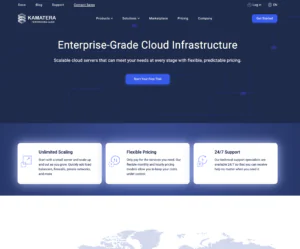
Kamatera offers powerful cloud VPS hosting ideal for custom Java application deployment. From Spring Boot to enterprise JSP platforms, users can deploy any stack with global redundancy and minute-based billing. While not tailored for beginners, it’s a flexible and performance-driven option for Java developers and SaaS teams.
Rating Overview:
Overall Score: 4.5
Performance: 4.7
Support: 4.5
Security: 4.5
Pricing: 4.3
Ease of Use: 4.1
Detailed Analysis:
Performance: Kamatera provides ultra-fast performance with dedicated CPU, SSD/NVMe storage, and low-latency networking.
Support: 24/7 support team assists with Java runtime issues, setup, and cloud orchestration.
Security: Firewalls, private networking, and role-based access controls are all available.
Pricing: Usage-based pricing ensures you only pay for resources used; setup requires some expertise.
Ease of Use: Requires admin-level knowledge for Java deployment, though templates and automation help.
Pros and Cons:
Ideal for scalable Java cloud deployments
Fully customizable stacks and resources
Global infrastructure with strong redundancy
Excellent support for custom JVM setups
Requires DevOps-level experience
Not a plug-and-play solution
-
Top 10 Cloud Hosting 2026
-
Top 25 Cloud Hosting 2026
-
Great Support 2026
-
Excellent Service 2026

Fotbo offers very limited Java hosting capabilities, suitable only for extremely lightweight Java applications or personal testing environments. It is not optimized for performance-heavy frameworks but may suit students or beginners looking to run basic servlet apps on a tight budget.
Rating Overview:
Overall Score: 4.0
Performance: 4.0
Support: 4.1
Security: 4.0
Pricing: 4.6
Ease of Use: 4.2
Detailed Analysis:
Performance: Suitable only for basic Java apps; not designed for sustained traffic or enterprise use.
Support: Help is limited to basic installation and scripting questions; Java-specific expertise is minimal.
Security: Basic controls like SSL and limited user permissions are included.
Pricing: Extremely budget-friendly, especially for students and hobbyists.
Ease of Use: Easy to navigate, but manual Java setup may still be required.
Pros and Cons:
Very low pricing
Good for learning and experimentation
Supports Tomcat/JSP if manually configured
Beginner-friendly interface
Not suitable for production apps
Limited Java-specific support and performance
-
Best Cloud Hosting Provider 2026
-
Over 99% Uptime 2026
-
Great Support 2026
-
Excellent Service 2026
-
Great Support 2025

Neoxea supports Java application deployment on SSD-based servers optimized for European users. While not intended for high-end Java enterprise use, it supports common frameworks and tools through VPS environments, making it a viable choice for freelancers and regional agencies.
Rating Overview:
Overall Score: 4.3
Performance: 4.4
Support: 4.2
Security: 4.3
Pricing: 4.4
Ease of Use: 4.3
Detailed Analysis:
Performance: Fast European servers keep response times low for Java apps hosted locally.
Support: Support team helps with Tomcat and servlet troubleshooting, with decent response times.
Security: Java apps are isolated and protected with SSL, malware scanning, and basic firewall rules.
Pricing: Affordable for small teams and independent developers building web apps.
Ease of Use: Good UI for managing hosting, with some tools for configuring Java runtimes.
Pros and Cons:
Optimized Java hosting for Europe
Solid performance for small-to-mid apps
Friendly support and helpful tools
Easy to set up for basic deployments
Not enterprise-grade for large Java apps
Limited auto-scaling or orchestration features
-
Top 10 WordPress Hosting 2026
-
Over 99% Uptime 2026
-
Excellent Service 2026
-
Great Support 2026

Cloud86 provides powerful, performance-optimized Java hosting with strong regional presence in the Netherlands. It supports a range of Java technologies on VPS or containerized platforms and includes advanced features like backups, NVMe storage, and full developer access. Ideal for agencies or Java developers in the EU needing secure, high-speed hosting.
Rating Overview:
Overall Score: 4.6
Performance: 4.7
Support: 4.6
Security: 4.6
Pricing: 4.5
Ease of Use: 4.5
Detailed Analysis:
Performance: Java applications benefit from lightning-fast NVMe drives and optimized JVM environments.
Support: Expert support available for Java-related issues, including deployment and performance tuning.
Security: Includes daily backups, malware scanning, SSL, and role-based access.
Pricing: Strong value for the feature set; not the cheapest but worth it for developers needing performance.
Ease of Use: Well-documented and smooth to configure via control panels and SSH access.
Pros and Cons:
High-speed Java hosting with NVMe
Strong developer support and tools
Secure, GDPR-compliant hosting
Great for EU-based Java developers
Slightly premium pricing
Focused mainly on the European region